
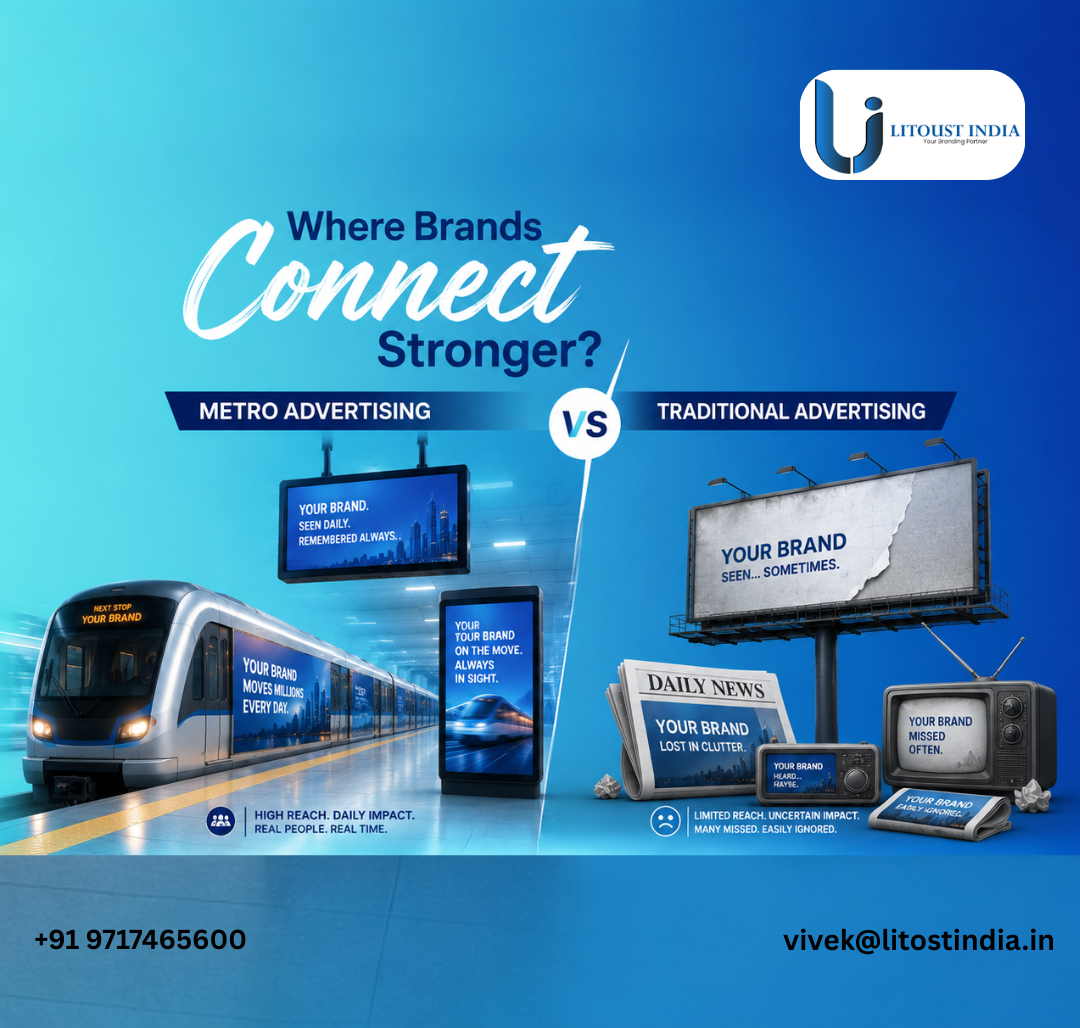
In a world where consumers are surrounded by ads every second, businesses are constantly searching for smarter ways to stand out. From television commercials and newspaper ads to digital campaigns and transit branding, every platform promises visibility. But when it comes to modern urban marketing, one strategy is rapidly taking over the spotlight — Metro Advertising.
So the big question is:
Does metro advertising actually perform better than traditional advertising?
The answer lies in how people live today.
Advertising Has Changed — So Has Audience Attention
Traditional advertising once dominated the market. Families watched TV together, newspapers were part of every morning routine, and radio ads reached millions daily.
But consumer behavior has evolved.
Today’s audience spends more time commuting, scrolling on smart phones, and interacting with visual spaces in cities. Attention spans are shorter, competition is higher, and brands need repeated visibility to stay memorable.
This is exactly where Metro Advertising creates a powerful advantage.
Why Metro Advertising Is Becoming a Branding Giant
Metro advertising places your brand inside metro stations, train panels, entry gates, escalators, digital screens, and even full train wraps. It turns public transportation into a moving branding ecosystem.
Every day, thousands of commuters repeatedly see the same advertisement while traveling to work, college, shopping hubs, or business districts.
That repetition builds trust.
Unlike newspaper ads that disappear after one read or TV commercials people skip online, metro ads stay visible throughout the commuter journey.
The Real Power of Metro Advertising
1. Non-Stop Brand Exposure
Metro commuters spend several minutes inside stations and trains. This gives brands longer visibility compared to quick billboard glances or skippable digital ads.
2. Urban Audience Targeting
Metro networks mainly attract city consumers — professionals, students, entrepreneurs, travelers, and families with strong purchasing power.
3. Premium Brand Image
When a brand appears across metro stations, it naturally feels more established, trusted, and large-scale.
4. Better Recall Value
Repeated daily exposure creates stronger memory retention. Even if commuters don’t immediately purchase, they remember the brand when needed later.
This is why agencies like Litoust India are helping businesses use metro advertising strategically for stronger urban visibility and long-term brand recognition.
Traditional Advertising Still Has a Role
Traditional advertising isn’t completely outdated. In fact, it still works effectively in many industries.
Television advertising helps with mass awareness. Newspapers still influence certain regional and older audiences. Radio works well for local promotions and event campaigns.
But the challenge is simple:
Modern consumers are harder to hold.
Most traditional ads now compete against smart phones, streaming platforms, social media, and short-form content.
That reduces engagement.
Metro Advertising vs. Traditional Advertising: The Difference
|
Factor |
Metro Advertising |
Traditional Advertising |
|
Audience Attention |
High |
Moderate |
|
Repeated Exposure |
Excellent |
Limited |
|
Urban Reach |
Strong |
General |
|
Brand Recall |
Very High |
Average |
|
Visibility Time |
Longer |
Shorter |
|
Premium Feel |
Strong |
Depends on medium |
|
Modern Appeal |
Excellent |
Sometimes outdated |
Why Modern Brands Are Choosing Metro Advertising
Today, businesses don’t just want visibility — they want impact.
Metro advertising helps brands:
- Stay visible daily
- Reach active urban audiences
- Build trust through repetition
- Create premium market perception
- Dominate high-footfall locations
From startups and educational institutions to fashion brands and real estate companies, metro campaigns are becoming a major part of modern marketing strategies.
Even growing businesses now partner with agencies like Litoust India to create metro advertising campaigns that blend creativity, location targeting, and brand storytelling.
Final Verdict
Traditional advertising still offers value, especially for broad-market campaigns. But in fast-moving cities where attention is limited and competition is intense, Metro Advertising delivers stronger engagement, better recall, and more modern brand visibility.
The future of advertising belongs to platforms people cannot simply scroll past — and metro advertising is one of them.
For brands looking to dominate urban markets, metro advertising is no longer just an option. It’s becoming the smarter move.
Questions & Answers
Everything you need to know about this campaign strategy, media placement options, and execution timelines.