

Litoust India as discussed has been in the Indian market for the past 8+ years and we have gone from success to success in this short period of time. We do Marketing and PR for our clients, but we work with the responsibility of being their business partners.
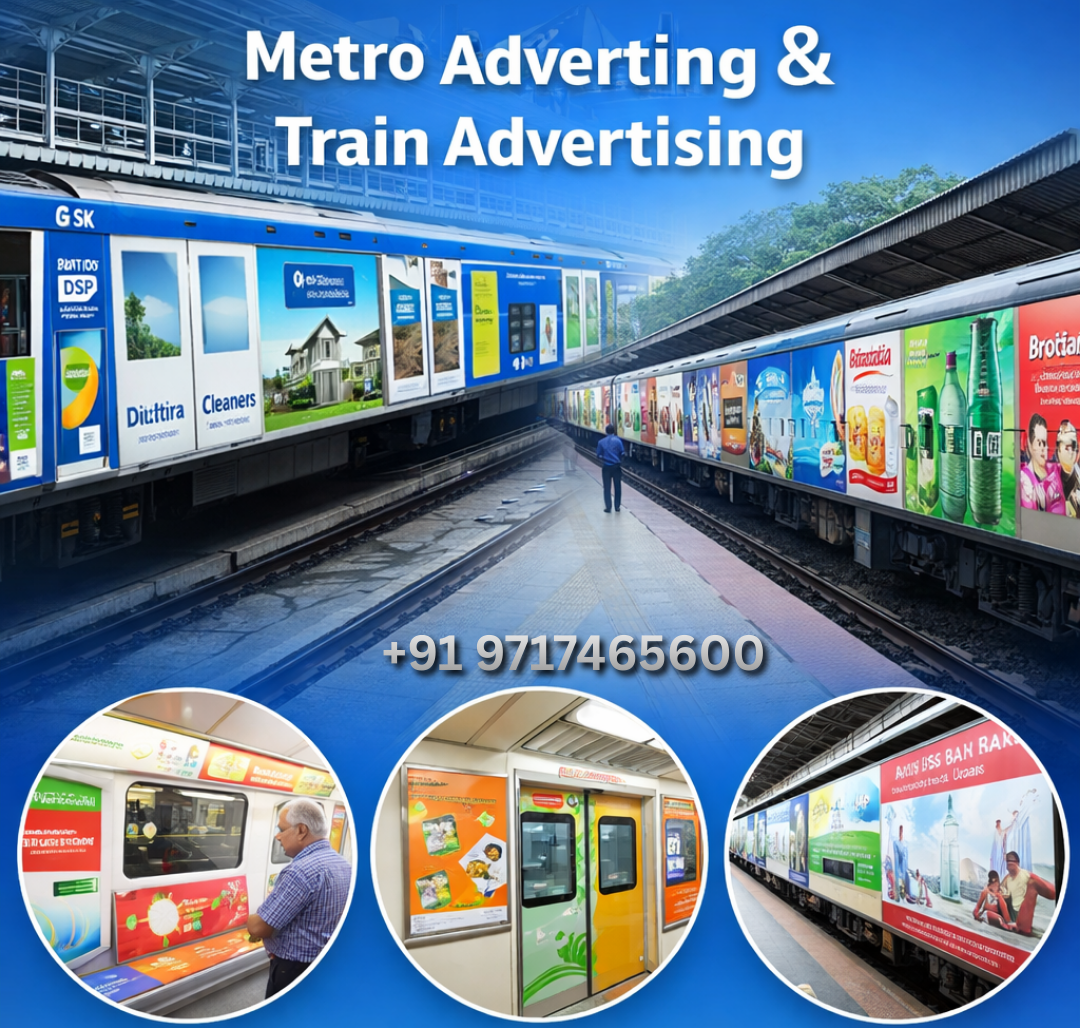
In an technology ruled by using virtual displays and shrinking attention spans, large manufacturers the world over are rediscovering the unmatched strength of metro advertising and train (railway) advertising. From international groups to speedy-developing Indian brands, transit media has emerged as a excessive-impact, excessive-remember advertising channel.
Among all outside and transit codecs, metro and train advertising together create a powerful visibility surroundings—attaining thousands and thousands of commuters each day across systems, stations, and transferring coaches.
At Litoust India, we’ve seen firsthand how well-deliberate metro and railway advertising campaigns help brands build visibility, credibility, and lengthy-time period recollect—often at a decrease cost than heavily saturated digital media.
Unlike digital ads that can be skipped, blocked, or ignored, metro and train advertisements are unavoidable. Daily commuters spend extended time:
This high dwell time leads to repeated exposure—one of the most critical drivers of brand recall.
Whether it’s metro wraps, in-coach panels, station branding, railway platform hoardings, or train exterior ads, metro and train advertising delivers:
This is exactly why big brands trust both metro and railway networks for mass communication.
Metro and train advertising is a globally proven medium. Cities like London, New York, Dubai, Tokyo, Mumbai, Delhi, and Bengaluru rely heavily on metro rails and long-distance trains.
Together, they offer a perfect mix of scale and targeting.
At Litoust India, we align routes, stations, passenger profiles, and travel patterns with brand objectives—ensuring that metro and train advertising delivers meaningful reach, not just visibility.
One of the biggest reasons brands are shifting towards metro and train advertising is cost efficiency.
With digital advertising:
In contrast, metro and railway advertising offers:
A single metro or train advertising campaign can deliver weeks or months of continuous exposure without recurring daily spend—making it ideal for brand-building and awareness-focused brands.
Consumers naturally trust ads displayed in public transport infrastructure more than random online banners.
Metro stations and railway networks are:
Metro and train advertising ensures:
This trust factor is a major reason established brands consistently invest in transit media.
Not every metro or train advertising campaign performs well—strategy is everything.
A professional agency focuses on:
At Litoust India, we combine media planning, creative execution, and placement strategy to ensure metro and train advertising campaigns are not just visible—but effective.
Metro and railway advertising offers unmatched creative freedom:
Our focus remains on:
When creativity meets the right transit environment, advertising literally moves with the audience.
Big brands think long-term. They invest in platforms that deliver daily familiarity and consistent presence.
Metro and train advertising offers:
Whether launching a new product, entering new cities, or strengthening leadership positioning—metro and railway advertising has become a preferred global choice.
Metro and train advertising is no longer just an alternative—it’s a strategic necessity for brands seeking mass reach without digital fatigue.
With the right planning and execution, metro & railway advertising delivers unmatched visibility, credibility, and cost efficiency.
At Litoust India, we help brands transform metros and trains into moving brand experiences—ensuring maximum impact, controlled budgets, and measurable results.
For brands looking to dominate both cities and corridors, metro and train advertising isn’t just smart—it’s essential
Ans: Metro and train advertising is a form of transit media where brands promote their products or services across metro systems and railway networks. This includes ads inside coaches, station branding, platform panels, train wraps, and railway hoardings—ensuring continuous exposure to daily commuters.
Ans: Metro advertising primarily targets urban, office-going, and premium commuters, while train (railway) advertising reaches intercity, regional, and mass-market travelers. Together, they offer brands both focused city reach and large-scale national visibility.
Ans: Big brands prefer metro and train advertising because it delivers high recall, repeated exposure, brand safety, and trust. Unlike digital ads, transit advertising cannot be skipped or blocked, making it ideal for long-term brand building.
Ans: Yes. Metro and railway advertising offers fixed-cost visibility and predictable impressions over weeks or months. In comparison, digital ads often involve rising CPCs, ad fatigue, and recurring daily spend.
Ans: Common formats include:
Metro train wraps and interior panels
Station branding and concourse displays
Railway coach branding
Platform hoardings and waiting-area panels
Digital screens inside metro stations and trains
Ans: For effective brand recall, campaigns usually run for 4 weeks to 3 months. Longer durations help reinforce brand familiarity among daily commuters.
Ans: Yes. With the right planning and format selection, metro and train advertising can be scaled to fit different budgets. Many growing brands use targeted routes or specific stations to achieve high impact without overspending.
Ans: Effectiveness is measured through estimated impressions, route footfall data, campaign duration, and brand recall studies. When combined with digital or offline tracking, transit media delivers strong measurable results.
Ans: Absolutely. Metro stations and railway networks are government-regulated public spaces, offering a clean, controlled, and highly credible environment—free from fake clicks, bots, or unsafe content adjacency.
Ans: Litoust India offers end-to-end transit advertising solutions, including media planning, creative design, approvals, execution, and campaign optimization—ensuring maximum visibility, controlled budgets, and measurable impact.